Do It Myself Blog – Glenda Watson Hyatt

Your Accessibility Conscience

My Oprah Moment, My Way

Filed under: I'll Do It Myself: The Book — by Glenda at 6:35 pm on Monday, May 23, 2011

Oprah’s final show is fast approaching. One of my dreams, at one point in my life as an ultimate Oprah fan, was to be interviewed by this self-made woman. While I was once pretty close to achieving this milestone, realizing this dream looks less likely as the hours tick by…so I have decided, instead, to imagine what might have been:

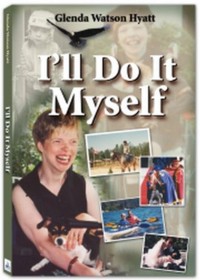
Oprah: Today I have the pleasure of interviewing a remarkable woman who, in spite of her parents being told to institutionalize her when she was a small child because she was too disabled to amount to anything, has proven all of the naysayers wrong. She has lived her life to the fullest and with meaning, which she shares in her autobiography I’ll Do It Myself – a humorous and inspiring read. Please welcome author, blogger and speaker Glenda Watson Hyatt.

Glenda: Thank you for this opportunity and for making my dream come true today.

O: The back cover on your autobiography I’ll Do It Myself reads, in part, “Glenda intimately shares her story to show others cerebral palsy is not a death sentence, but rather a life sentence.” Cerebral palsy is a life sentence, not a death sentence – can you explain what you mean by that?

G: When most people first see me, they see my chair, my jerky movements, they may hear my apparently unintelligible speech – and they tend to assume that I can’t do much, that my life isn’t meaningful or fulfilling. That, in a sense, I have been handed a death sentence, trapped inside a body that doesn’t work. When, in reality, nothing is further from the truth. Yes, cerebral palsy is a lifelong condition, but it hasn’t stopped me from living my life to its fullest, whether that was horseback riding and camping as a child, spending seven years at university getting my Bachelor degree, or more recently, ziplining across Robson Square in downtown Vancouver during the 2010 Olympic Games and traveling solo across the continent to give presentations, recently in Chicago, Alexandria (West Virginia), Austin and San Diego.

O: When one finishes reading I’ll Do It Myself, you want them to come away with what?

G: I am not looking for them to compare their situation with mine – that really bugs me when people measure their struggles against mine or someone else’s. I’d rather they put things into perspective within their own lives, within their own world. I want them to come away with hope, that amazing things are entirely possible and within their reach.

O: As you may know, I had a book deal to write my autobiography when I was about 40. But I decided against it because I felt I hadn’t lived enough yet to warrant an autobiography. Instead I ended up doing a cook book or something like that. Why did you write the book when you did?

G: I was 10 years old when the dream struck to write a book about my life to help others. For the next 30 years, I daydreamed, learned, took publishing courses, wrote, edited, asked a ton of questions and procrastinated a whole lot. Finally, in October 2005, after listening to messages from both you and Reverend Robert Schuller – at that time you both were saying things like “Live your best life”, “Follow your dream”, and “Live your passion” – I publicly announced that I would launch my book on my 40th birthday, a little more than a year away. That definitely kicked my butt in gear! I actually launched in early December 2006, only a few weeks after my birthday.

I felt that point in my life was the right time to put out a book; that kids and young adults with disabilities could benefit from my experiences to date, rather than waiting until I was a more “appropriate” age for writing an autobiography (whatever age that is). I didn’t want to miss the opportunity to reach those people now. And, I figured it would leave room for writing a sequel—

O: Will there be another book?

G: Quite possibly. One idea has been niggling me for a while; a more focused look at one aspect of my life. The challenge is finding even more time to write, on top of writing for my two blogs. But, yes, I’m getting closer to giving the idea more attention, somehow.

O: You are such an inspiration to others. What inspires you?

G: Thank you. I am inspired when I witness others living their passion. When they so love what they are doing, when they are so driven and focused on what they are doing that their passion is oozing from them. That’s what inspires me.

O: What do you know for sure?

G: So much human potential is wasted because people fail to look beyond the disability to see the ability, the drive, and the insights. This is inherent in the education system, the social services system and the corporate world. Rather than discounting and devaluing based on disability, if every individual was encouraged to rise up to meet expectations, imagine all that may be accomplished, the ideas conceived, the secrets of life revealed.


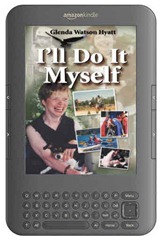
Glenda’s autobiography I’ll Do It Myself is available as a paperback or an ebook, and is also available on the Amazon Kindle.

If you enjoyed this post, consider buying me a cafe mocha. Thanks kindly.

Related Posts

I’ll Do It Myself Now Available on the Kindle

Filed under: I'll Do It Myself: The Book — by Glenda at 12:39 pm on Tuesday, December 14, 2010

I'll Do It Myself by Glenda Watson Hyatt - Kindle Edition

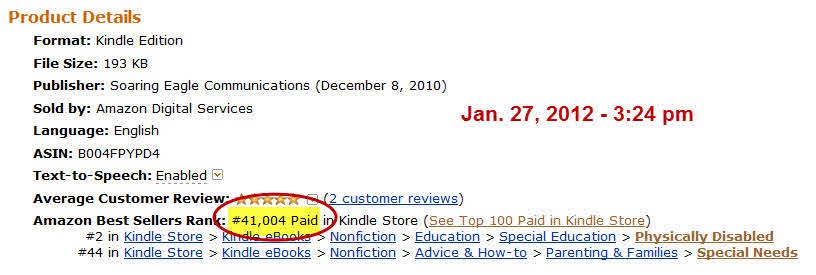
My autobiography I’ll Do It Myself has gone digital and is now available on the Amazon Kindle!

This means my book can now be enjoyed on all of these devices (links take you to the device pages):

For those individuals who prefer holding the real book in your hands, 192 paperbacks and 34 large-print copies are still available from me, complete with autograph too! ;)

Happy reading!

If you enjoyed this post, consider buying me a cafe mocha. Thanks kindly.

Related Posts

Life’s Most Important Lessons Aren’t Learned in the Classroom

Filed under: I'll Do It Myself: The Book, Living with a disability — by Glenda at 7:09 pm on Thursday, October 8, 2009

From Special Ed Classroom to University GraduateDuring my elementary school years, I was fortunate that I didn’t face name-calling, teasing and bullying like many other kids with disabilities do at school. However, there was one incident that cut me to my core.

As I share in my autobiography I’ll Do It Myself:

Mom taught at my elementary school, so she would pick me up from my classroom at the end of the day and carry me out to the van at the front of the school; the school wheelchair stayed at school. One day, Mom had to stop at the office on our way out. She sat me down on the floor in the hall next to the gym doors at the main entrance. She would be only a couple of minutes, and I wasn’t in the way as people were leaving.

One boy, a year or two older than me, walked by and asked, “Are you retarded?” and then kept walking. I didn’t know what to say, and if I had said anything, my speech would have added fuel to the fire and would have confirmed his assumption. I said nothing.

Once Mom put me into the van, I burst into tears. When I managed to stop crying enough to communicate what had happened, Mom was sympathetic. She attempted to make light of it like she usually does, suggesting that next time I reply with something like, “No, are you?” – as if I could get that out clearly enough for it to be effective.

The incident was soon brushed off and forgotten – on the outside; but it wasn’t forgotten on the inside. That question hurt me to my core for a long, long time. Even though I knew I wasn’t retarded, I realized that others did see me as something I’m not. Since that day, I’ve been trying hard to prove to others that I’m not retarded.

Having reflected upon this over the years, I now see two issues here; the first being the word “retarded”. Several kids from the then Woodlands Institution were bussed to our school; many of them had mental retardation, as the disability was called back then. Looking back, I have no doubt that the boy meant no harm or ill-will. He asked a simple question. But, for me, “retarded” was a loaded word; it hurt, it degraded, it stung. Because of the use of the word through history, for many people with disabilities, being called retarded is as hurtful and demeaning as calling an African-American the n-word.

Ideally the word would vanish from our language. But, considering how pervasive the word is (how often do you hear someone utter something like “that is retarded” or “what a retard”?), the word vanishing is not realistic, unfortunately. The next best option is to disempower the word for those who are negatively affected by it. The word has power only if we allow it to. I’m still sorting through how exactly do to that, which might make for a lively discussion in the comments below or a topic for a future post.

The second issue stemming from the incident was that my feelings weren’t acknowledged. A joke was quickly made and then the matter was brushed aside. No doubt that was easiest in that moment. When I’m upset and crying, Glenda-ish becomes even more difficult to understand. Having a deep conversation at that point was pointless. However, it meant my feelings were discounted.

A similar situation happened recently when Darrell was laying on an emergency room stretcher and wearing an oxygen mask because his pneumonia had worsen so much since our first trip to the ER four days earlier. Sitting at the foot of his stretcher, I was feeling guilty for not being able to make him the proverbial chicken soup or to raise him up high enough in bed. Perhaps if I had been able to properly care for my husband, then we may not have needed to call the ambulance to take him to the hospital where he was admitted for two weeks.

Irrational I know, but that was how I was feeling in that moment. While sitting there with Darrell, someone I love and respect, and whose profession is to comfort and counsel people in such situations, came to visit.  Rather than acknowledging my feeling and proceeding from there, he reprimanded me for feeling that way.  That day was the toughest one for me during the two-week hospital ordeal.

We don’t like seeing our loved ones hurt and upset; we’d like them to be happy all of the time. But, life sucks at times! To live a full life sometimes means, unfortunately, getting hurt, being upset, feeling down at times. Acknowledging those times, those feelings is how we can wholly and completely accept our loved ones. Sometimes acknowledging an owie exists is as important and healing as is gently covering it with a band-aid.


Previous miniseries post: Integration: Balancing Including the Child with Benefiting the Child

Next miniseries post: Coming soon!

If you enjoyed this post, consider buying me a cafe mocha. Thanks kindly.

Related Posts

Integration: Balancing Including the Child with Benefiting the Child

Filed under: I'll Do It Myself: The Book, Living with a disability — by Glenda at 7:50 pm on Friday, September 25, 2009

From Special Ed Classroom to University GraduateThe beginning of Grade 4 saw my special ed class at the new school with a new teacher Mrs. Peart. My class, along with a couple of other classes, moved from the annex to the main school a few blocks away.

This move meant we had access to more resources, such as the library. Once a week our class trekked down to the library to learn about the Dewy Decimal System and to check out a book to take home. I felt like a big school kid then.

As I share in my autobiography I’ll Do It Myself:

After a few weeks, the librarian strongly encouraged me to check out the very limited section of books on tape, assuming that usingthe newest technology at the time might be easier for me than holding books and turning pages. Honestly, I felt as though she was more concerned that I might crumple the corners as my cp hands turned the pages.

Being a teacher, Mom knew that listening to stories was not the same as reading books. Limiting her bright child to tapes to avoid crumpled corners was not acceptable. Mom, who firmly believes that one catches more flies with honey than with vinegar, politely mentioned to the librarian that I had owned books since I was young and was very careful with them. As a young child, Mom gave me old Sears catalogs to look at so that I learned how to turn the pages.

I went onto read the entire Little House on the Prairies series, wishing I was Laura Ingalls living in the log house and experiencing exciting adventures. I also read the very few books available at that time about people with disabilities, including Wren, Ice Castles, The Other Side of the Mountain, and Joni (pronounced Johnny).

Back then, I didn’t know any successful people with disabilities who were much older than me, and I don’t recall any people with disabilities in the public eye. These books, particularly the autobiographies, provided me with much needed role models. They showed me what was possible, despite having a disability. It was one thing to have my parents, teachers and therapists tell me to work hard so that I could accomplish anything I wanted. It was another thing to read about adults in wheelchairs who became teachers or got married. I began to realize what was truly possible. Those books planted the seed, when I was about ten, that I would one day write my own story to help others to see what was possible when living with cerebral palsy.

I'll Do It Myself by Glenda Watson Hyatt That one day came thirty years later when I finally self-published my autobiography. The journey was long, but one that I am glad I followed it through to the end.

Grade 4 was also the beginning of another journey; the one from special education to regular class. My classmate Peter, my best friend Sandy and I were integrated into the regular classroom long before for integration, mainstream and inclusion became buzzwords. The three of us joined the regular class in the afternoon for the non-core subjects Social Studies, Science and Music.

Looking back, there is one thing that puzzles me. Grade 4 Music meant learning to play the recorder, a flute-like instrument. Coordinating the fingering with both hands, the breathing, the lips and tongue, and the swallowing didn’t work for me. I could barely get any noise out of that thing. Yet, I did continue practising dutifully and trying my best. I did, however, learn the basics of reading sheet music: Every Good Boy Deserves Fudge and Fat Albert Can’t Eat. Like that does me any good now!

What puzzles me is how I was included in Music, which was an exercise in frustration and futility for me, yet, without parent intervention, I would have been excluded from reading library books, which was critical to my academic career. Even though integration was a positive, advancing experience, I wonder if some suitable adaptations or accommodations may have been beneficial. Obviously, listening to books on tapes was not necessary, but playing a more suitable instrument may have made Music class more meaningful and rewarding to me.

With integration, mainstream and inclusion all of the buzz now, hopefully teachers and educators have found the balance between including the child with a disability and making that inclusion meaningful and beneficial to the child.


Previous miniseries post: Excuse Me If I Lay on the Floor When We Meet

Next miniseries post: Coming soon!

If you enjoyed this post, consider buying me a cafe mocha. Thanks kindly.

Related Posts

Excuse Me If I Lay on the Floor When We Meet

Filed under: I'll Do It Myself: The Book, Living with a disability — by Glenda at 5:08 pm on Sunday, September 20, 2009

From Special Ed Classroom to University GraduateSchool mornings began early at 6am to allow enough time for me to feed myself breakfast, typically either oatmeal porridge or two pieces of peanut butter toast, each folded in half to allow for easy grasping; and, for Mom to help me to get dressed, including those long-legged braces that were cold on winter days and sticky hot on summer days. It wasn’t that I couldn’t dress myself; it simply took longer than we had on school mornings. Mom’s help on weekdays was one of those instances when practicality overrode independence.

On weekends, when morning routines weren’t precisely timed, I was left to dress myself and, for the most part, went braceless. The freedom of weekends!

A young Glenda wearing her bracesAmidst learning to read, print and do math in class, I also had physio, occupational and speech therapy several times per week. The grandfatherly bus driver Mr. B spent all day shuttling us back and forth to the treatments centre, later called the Child Development Centre, for our therapy sessions.

A young Glenda bouncing on a trampolineWith cerebral palsy, intensive therapy is necessary at a young age to maximize potential physical development. However, that fact didn’t make therapy any more enjoyable to a young child. Tasks like repeatedly grasping beanbags and putting them in muffin tins, climbing up a few stairs to simply reach a brick wall, and being rolled around on a large, inflated ball or tube were monotonous, boring and seemed pointless to this young redhead, but I was a cheerful, cooperative patient and I complied. Trampoline time was the only fun time.

Speech therapy was the most puzzling. As I share in my autobiography I’ll Do It Myself:

Speech therapy seemed rather bizarre to me. The therapist sat on a floor mat with me lying on my back between her outstretched legs. My legs wrapped around her waist, and her stinky toes were in close proximity to my nose. She then proceeded to stick her fingers in my mouth to wiggle my lips, supposedly to loosen them. She alternated between using her fingers and ice cubes. When the speaking segment of the therapy began, she pushed on my chest in attempts to improve my breathing capacity. After years of this hefty woman pushing down on my chest, I am convinced that was why I was such a late bloomer.

As I laid on my back staring at the ceiling tiles, I was puzzled. What was I supposed to do when I met people in the real world? Lay down on my back, on the floor, before speaking to them? I envisioned myself sprawled out on the ground when meeting a friend at the shopping mall or grocery store. This was not a dignified thought. Not surprisingly, pillow talk is some of my clearest speech!

Glenda reaching for a ring during a physio session
Photo credit: On Top of the World, National Film Board of Canada

All of this therapy meant much time away from the classroom. One year my physio sessions happened to be scheduled right after recess and I missed most math periods, putting me a grade level behind. I eventually skipped a grade in math, which caught me up with my peers in regular class. In high school, I ended up taking Algebra Honours; obviously, missing a year of math wasn’t detrimental to my learning. I have often wondered what that says about the school curriculum: how much of it is repetitive and, perhaps even, unnecessary?

Once I was integrated into regular class, my therapy sessions were shifted to after school. I then was able to spend my school days completely on academics.

The special ed classroom was where I needed to be during my early school years in order to have the flexibility in my education to maximize my physical development potential.


Previous miniseries post: Special Ed Class Provides Early Training for the Left Thumb Blogger

Next miniseries post: Integration: Balancing Including the Child with Benefiting the Child

If you enjoyed this post, consider buying me a cafe mocha. Thanks kindly.

Related Posts

« Previous PageNext Page »