Do It Myself Blog - Glenda Watson Hyatt

My Journey to Six-Figure Blogging Begins Today

Filed under: Blogging, Work — by Glenda at 10:24 pm on Saturday, May 17, 2008

gw Glenda giving the ProBlogger book a thumbs up
Left Thumb Blogger Begins Her Journey to Six-Figure Blogging

A couple of weeks ago I pre-ordered ProBlogger: Secrets for Blogging Your Way to a Six-Figure Income by Darren Rowse and Chris Garrett. The very next day I received a Twitter message from Chris that I had won copy of their book. Wow! I didn’t know I had even entered a contest. Is that a message from the universe or what?! (I will be giving away one copy at a later date.)

Reading Darren’s story about how he went from a hobby blogger to a six-figure problogger in three years gave me goosebumps!

I yet again laughed at what an employment counselor once told me: Blogging is a passing fad. Well, perhaps it is a fad, but, until it fully passes, I know I can create an income from blogging. It may not be a six-figure income; I’d be quite content with a decent five-figure income.

With blogging as an income source, it erases all of the barriers I, a person with a physical disability, faced when searching for a job. With blogging, my typing speed and inability to answer phones – requirements for many jobs I applied for – don’t matter. With blogging, I don’t need to deal will transportation or the accessibility (lack thereof) of the workplace. I can work from the comforts of home, on my own schedule, doing what I love to do: writing and connecting with people from around the world. With blogging, technology has finally caught up to me and given me something else I can do, and with stories like Darren’s and Chris’s, I now have a goal to strive for.

I dove into ProBlogger, skimming the first few chapters that introduced blogging and explained how to set one up. Then came the good parts: blog writing, earning strategies, promotion and marketing. The ideas began flowing – not a book to read before falling asleep! A notebook on hand while reading is a must.

Both Darren and Chris point out, several times throughout the book, that problogging is not a get-rich-fast scheme; that it takes consistent hard work, countless late nights, some trial and error, and a bit of luck. None of which is new to me.

To go as far as I can with blogging, I need to learn, to absorb, as much as I can about the medium, the technology, the community-building, and the promotion strategies. Much of these can be learned online and from the still few books on blogging. But, there comes a point when nothing beats being in an actual room full of bloggers, exchanging ideas, strategies and lessons learned face-to-face.

The ultimate event for such experience is SOBCon – a conference for Successful and Outstanding Bloggers, founded by blogger extraordinaire Liz Strauss and held in Chicago in May. Touted as Biz School for Bloggers, attendees are guaranteed to leave with a Business Action Plan that can be immediately executed for measurable success. A plan for becoming a better and more effective blogger sounds good to me!

Unfortunately, SOBcon wasn’t in the budget this year. However, SOBCon09 definitely can be! A year to raise $2000+ – that is definitely doable! This is where I would like to request your support. I am not asking for charity. That isn’t my style. What I am asking for is, if you enjoy the posts on this blog, if you find value in what you read here, please consider buying me a coffee (link at the bottom of the post ) or a copy of my autobiography I’ll Do It Myself.

Together, we can make this happen. I look forward to meeting many of you in Chicago next May.

Thank you.

If you enjoyed this post, consider buying me a coffee. Thanks kindly.

The Left Thumb Blogger Turns Pro

Filed under: Blogging, Work — by Glenda at 3:41 pm on Tuesday, January 8, 2008

For the past several months I have been vying for the opportunity to be paid to Blog for a Year. I would like to thank everyone who has voted for me. Your support has been overwhelming and touching.

I’d like to acknowledge the following people for posting on their blogs about the contest. By no means is this an exhaustive list, so please do not feel slightly in the least if I missed including you. I do appreciate all that you have done.

I also would like to thank my Fan Club and countless others who posted on forums and sent out emails to the masses. You’re awesome and I’m already a winner thanks to all of you! Seriously.

The votes are in and tallied:

  • In third place, with 11,752 votes, is moi!
  • In second place, with 18,252 votes, is Melanie in Orygun
  • And the winner, with 18,951 votes, is Absolutely True. Congratulations!

It was a great experience and I learned a lot about using social media for this purpose. (Hillary, Obama, contact me! It’s not too late.)

However, Absolutely True isn’t the only one to be offered a blogging contract. In December I was offered a contract to blog 1-3 posts per week at Disaboom. I joined the problogging league last week! Hope you’ll join me there. I will also continue blogging here, giving my thumb a thorough workout!

If you enjoyed this post, consider buying me a coffee. Thanks kindly.

Hiring People with Disabilities is Expensive: Myth Busted

Filed under: Living with a disability, Work — by Glenda at 1:59 pm on Monday, October 22, 2007

A pile of cash
(Photo credit: Stephen Hyun)

In the United States, October is National Disability Employment Month: a month devoted to increasing public awareness of the contributions and skills of employees with disabilities. In this day of labour shortages in various sectors, unemployment of people with disabilities still remains high at approximately 45%, according to the Office of Disability Employment Policy. The unemployment rate of Canadians with disabilities is equally as high.

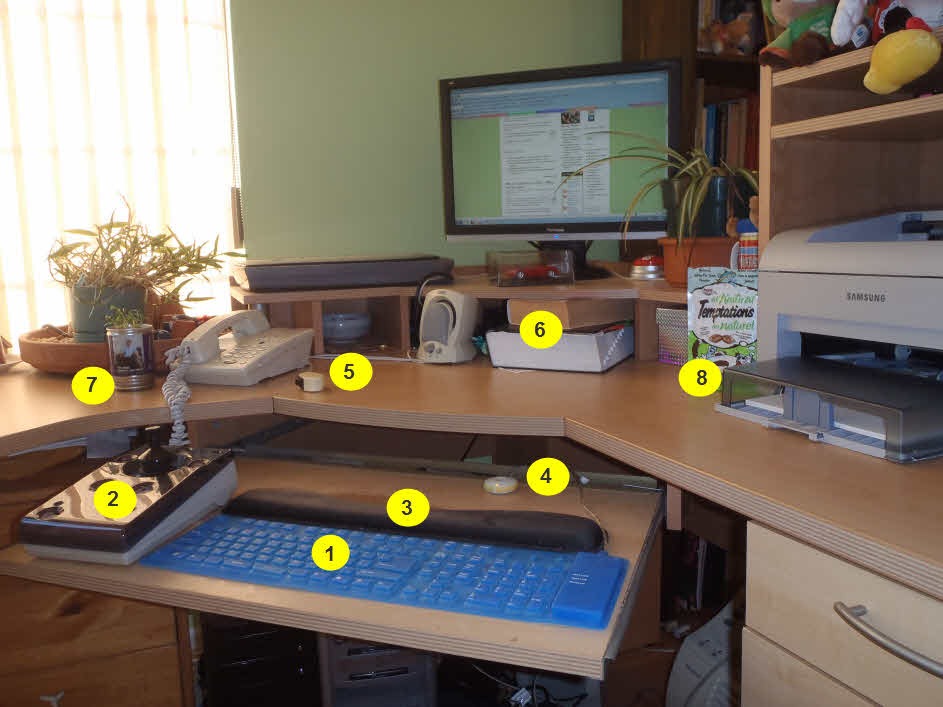
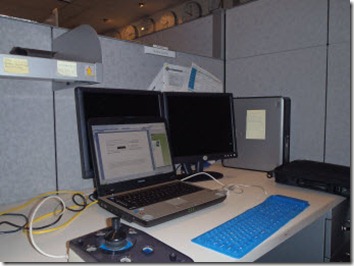
People with disabilities face many false stereotypes and myths when searching for employment. One such myth is accommodating a person with a disability in the workplace is expensive. With this in mind, I would like to share the special equipment and technology that I use during my work day (many of which I demonstrate using in my video):

  • A standard keyboard without additional keys above the function keys so that I can glide my hand along the top to steady my hand while typing. (Keyboards without the additional multimedia and internet keys are becoming harder to find.)
    (Cost $20)
  • An Esterline Joystick gives me greater control than with a mouse. (Cost $600)
  • Words+ EZ Keys software for word prediction and completion to save me a bit of typing. (Cost $695)
  • TextAloud softwarefor proofreading my writing and for converting text into mp3 audio files when I give presentations. (Cost $30)
  • NeoSpeech’s Kate is my voice. (Cost $35)
  • Skype provides me with another means of communication. I can use either the text chat while the other speaks or texts, or I can use my webcam while speaking (people understand Glenda-ish better when they can see me speak) and then I use the text feature when we get stuck on a word or two. (free when chatting with other Skype users)
  • The total cost of the extra technology I use is approximately $1380. Putting this into perspective, is this amount any more than signing bonuses or car allowances offered to other potential employees?

    According to the Job Accommodation Network, the average cost to accommodate an employee with a disability is $500. (I’m above average!) Some funding and tax incentives are available to cover these costs.

    Myth: It is expensive to accommodate people with disabilities in the workplace. BUSTED!

    If you enjoyed this post, consider buying me a coffee. Thanks kindly.

Tags: , , ,

Week in Review

Filed under: Living with a disability, Work — by Glenda at 7:33 pm on Friday, July 20, 2007

A week's calendar
(Photo credit: Sandra Cunningham)

Wow, what a week!

Monday: Amidst the uncertainty of a looming labour strike, Darrell and I delivered the second web accessibility training session for a local municipal government. With both sessions successfully delivered, I can now say that we hadn’t done anything like that before!

Darrell is a qualified instructor, but web accessibility isn’t his area of expertise. Web accessibility is my expertise, but I haven’t done much instructing before, mainly because of my speech impairment. But, presented with this opportunity (or challenge, depending upon your viewpoint), we did what we do: we figured out ways to work around our strengths and weaknesses and did whatever it took to get the job done. We must have successfully met the challenged because we received at enthusiastic applause.

Employers don’t know what they are missing by not hiring us!

Tuesday: I picked up my first pair of reading glasses. I’m not thrilled with having reached that milestone, but I confess its nice not needing to hold the page just so to read the fine print. Now, if only I had time to curl up with a good book!

Wednesday: The doors to Readers’ Café officially opened with a resounding success. The next Readers’ Café will be Wednesday, August 1st, at 4-7pm PDT / 7-10pm EDT. Be sure mark your calendar!

Thursday: After three hours of fitting, fiddling and fixing, my butterfly brace was finished. Wearing it is like wearing a cast: I have absolutely no movement now in my ankle, which makes putting on the $135-per-pair shoe very tricky.

The orthotist was concerned as she was making the brace that I wouldn’t be able to get it on myself. She even called the rehab specialist with her concern. His response was to make the thing and then they would figure out how to get in on; he would arrange for help to come in, if necessary. Have someone to come into our home every morning only to put on a brace and shoe? Great, something else to schedule into our busy! What happened to fostering independence so that I can do things myself?

Well, I’ve managed to get the brace on myself, but I need Darrell’s help to get the shoe on. It takes an extra half hour in the mornings. I’m not sure what I’ll do the mornings Darrell is out of the house early. But, I will figure out this challenge too – somehow!

(Saturday morning update: I did it! The trick was a cat toy, a drawstring from a pair of track pants and a half hour. Now I can start my day!)

Today: Thank goodness its Friday because I am out of steam!

Watch for a special announcement early next week! Until then, please vote and have a great weekend!

If you enjoyed this post, consider buying me a coffee. Thanks kindly.

Blogging For Inclusion

Filed under: Advocacy, Living with a disability, Work — by Glenda at 2:24 am on Tuesday, May 1, 2007

Blogging Against Disablism Day, May 1st 2007

Today I join more than 100 other bloggers in blogging against disablism. The intent is, by joining together in discussing discrimination still facing people with disabilities, we will bring the issue to the forefront yet again.

What is disablism? A pamphlet by Demos, the British think tank for everyday democracy, offers this definition:

Disablism n. discriminatory, oppressive or abusive behaviour arising from the belief that disabled people are inferior to others.

(although you won’t find a definition in a dictionary)

Disablism is the British equivalent of the American term ableism used to describe discrimination against people with disabilities in favour of people who are not disabled. Ableism discriminates, devalues and denigrates the same as does racism and sexism. Ableism treats those without disabilities as the standard of “normal’, against which everyone is measured.

Being a woman who has lived with cerebral palsy for forty years, I could share countless stories about how I have been discriminated against and treated “less than” by doctors, bus drivers, potential employers, and strangers. Discrimination, whether direct or indirect, is the main reason I chose the self-employment route. It’s not because I didn’t want the steady paycheque, the pension plan, or the friendly banter around the water cooler; it is because employers couldn’t get beyond their heebee-geebees about my disability during the interview process.

One interview was at an inaccessible building (another form of discrimination), yet the employer blatantly refused to meet with me at a more accessible location. If he had determined I was the most suitable candidate and had offered me the job, Vocational Rehabilitation Services could have then stepped to assist in making the workplace accessible. By refusing to interview me, he did not permit me the opportunity to demonstrate my capabilities, skills and talents. I eased my hurt by convincing myself that he missed out on hiring the most meticulous and creative Newsletter Coordinator he ever would have had. But, in reality, the experience did (and still does) sting.

I could go on and on about ways I have experienced discrimination and disablism (or ableism, depending upon which side of the pond you are on); but, really, where would that get us? What good is rehashing negative experiences? And, according to the Law of Attraction, focusing on negativity will only bring more – that is something I can definitely do without! Rather than being against disablism, I’d rather be for inclusion. By focusing on what I want, rather than what I don’t, the Law of Attraction works in my favour.

Being self-employed and working mainly in the virtual world, I can choose when and how much to disclose to clients. Many clients do not know the extent of my cerebral palsy; those who do know do not see it as a factor as long as I can do the work. We focus on the task at hand and my talents, expertise and passions are fully utilized; such a liberating feeling!

If my disability doesn’t matter much online, how can we make disabilities less of a deal when face-to-face? How can we achieve an inclusive society? I’d love to hear your ideas. Let’s talk.

If you enjoyed this post, consider buying me a coffee. Thanks kindly.

Including Children with Disabilities in ‘Take Our Daughters and Sons to Work Day’ Proves Revolutionary

Filed under: Advocacy, Work — by Glenda at 2:10 am on Wednesday, April 25, 2007

On Thursday, April 26th, children and youth will be joining their parents at work for the annual Take Our Daughters And Sons To Work® Day, created by the Ms. Foundation. Many workplaces are hosting tours, films and other fun activities to introduce these kids to the workplace, to show them the value of their education and to inspire them to envision their future.

What about children with disabilities? Will they be equally included in this important step in exploring their possible career choices? Will employers and colleagues welcome children with disabilities into their parents’ workplace in the same manner in which they welcome children without disabilities? Or, is this another event in which children with disabilities and their parents feel excluded? Is the workplace even accessible to people with various types of disabilities?

When I began thinking about writing about making Take Our Daughters And Sons To Work® Day inclusive, I had wanted to share the innovative ways employers were including all children in this day. After spending a couple of hours searching with Google, I was surprised (or, maybe not that surprised; more disappointed) to find very little on the subject. Even the official Take Our Daughters And Sons To Work® Day website, which offers activity tips to workplace coordinators, teachers and parents, wasn’t enlightening. The site isn’t even accessible to people with disabilities.

Given that this year’s theme is "Revolutionizing the Workplace", I would like to initiate a discussion on how we can revolutionize the workplace by making it truly inclusive and accessible, beginning with the first introduction to the workplace: Take Our Daughters And Sons To Work® Day.

Although it is too late for this year’s “Take Our Kids to Work” Day, it is not too early to start planning to make next year’s event inclusive. Here are a few ideas to get the discussion going:

  • Include employees and guest speakers with disabilities in the day’s event.

    For example, in 2004, Merrill Lynch invited Paralympic athlete, model and actress Aimee Mullins to be one of three important role models to speak about their achievements, answer children’s questions, and take them to exhibits and business meeting simulations.

  • Include images of children and adults with disabilities in promotional materials.

    When people can relate to individuals portrayed in images, they are more likely to feel the material may relate to them. To encourage children with disabilities (and their parents) to participate in the day’s activities, the content must also relate to them.

    The way in which individuals with disabilities are portrayed is also important. In off-the-shelf images, individuals with disabilities are often portrayed in inferior roles; for example, as the child, student, patient, victim, or employee. Images portraying individuals with disabilities also as parents, teachers, sales people, managers, business owners, doctors/nurses or lawyers, would aid in dispelling the helpless/dependent stereotype often facing people with disabilities.

  • Use an inclusive policy in promo material.

    For example, Penn State University encourages persons with disabilities to participate in its programs and activities. Contact information is provided if you anticipate needing special accommodations or have questions about the physical access.

    Similarly, the National Institutes of Health provide Sign Language Interpreters and other reasonable accommodations upon request.

  • Show films that include captioning and auditory description.

    Also, when showing films to excite and educate children about career possibilities, try to use films that include employees and employers with disabilities. Such films may be scarce; inclusive career and recruitment videos may be an area for improvement. The Canada’s Private Broadcasters’ Public Service Announcement - “Open Your Mind” is a refreshing example of people with disabilities being portrayed as successful employees.

Including people with disabilities in Take Our Daughters and Sons to Work® Day not only benefits children with disabilities by encouraging and inspiring them to reach their full potential, it also shows those without disabilities that the workplace, and society at large, needs to include and accept diversity. At some point during your daughter’s or son’s career, a child with a disability will be your child’s employee, colleague or employer. Are both children being prepared for their roles?

If you enjoyed this post, consider buying me a coffee. Thanks kindly.