Do It Myself Blog – Glenda Watson Hyatt

Motivational Speaker

Wheelchair Wraps: A Crazy Idea or the Next Advertising Trend?

Filed under: Living with a disability,Work — by at 9:32 pm on Monday, January 11, 2010

Coming home the other day, I noticed a parked car with several large stickers; quite possibly advertising. That got me thinking…

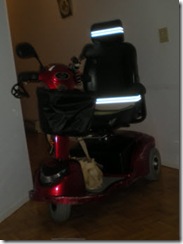
Front view of Comet scooter Why not paid advertising on my mobility scooter?

People tend to look my direction when I drive by, so why not put something in front of their eyeballs? And earn money while doing it?

Seriously.

Advertisers wrap cars, buses, trucks, and segways. Why not scooters and wheelchairs?

Here’s the benefits, as I see them:

  • People look anyway. Give them a message to look at.
  • Advertising on a scooter/wheelchair is unexpected and would catch attention.
  • I can go where cars, buses and trucks can’t.
  • No other advertisers are currently advertising in that way or in that space.

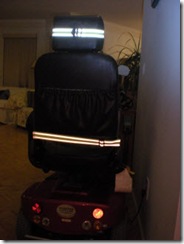
Back view of Comet scooter Looking at my scooter, I see two potential places for advertising really are visible:

  1. The basket on the front (shown in the photo above). This way the basket can easily be removed for situations when advertising would not be appropriate.
  2. The back of my chair. This place would not interfere with my use of the scooter or in photos.

Interested? Contact me to discuss this opportunity before someone else does! Seriously!

If you enjoyed this post, consider buying me a chai tea latte. Thanks kindly.

Related Posts

What is in a word? The evolution of disability language continues

Filed under: Advocacy,Living with a disability — by at 3:36 pm on Wednesday, January 6, 2010

In a previous post, I shared one indicator of a society’s regard for the disabled lays in the terms used to label them. Words like cripple, invalid and handicap – used to dismiss, discard and devalue individuals seen as different – slowly disappeared as the social model of disability “gave way to the empowerment of people with disabilities through the development of a vigorous disabled identity and self-advocacy movement.”

For the first time in history, we were empowered to name the labels that define us. Although the discussion continues, sometimes at ad nauseam, the current acceptable terminology is people-first language, which puts the person before the disability. But, even here, there are issues with the word disability.

As Mama Terapeuta, a linguist and mother of a young daughter with cerebral palsy,  explains in her post Hablemos (En serio) de Discapacidad, loosely translated by Google Translate to "Let’s Talk (Seriously) Disability":

…disability is defined in opposition to performance and to some extent also health. It is classified by different degrees of ‘problems’ and to define explicitly that ‘trouble’ capabilities must be compared with what is normal for one. What can I say … To me this is a reason for not using the word disability.

With the term "disability", there needs to be an ability, a norm, in order for there to be a disability; disability is measured against an ability and is a measure of inferiority, of being less than.

Rather, Mama Terapeuta favours "functional diversity" – a phrase now commonly used in the Hispanic community. If I understand her correctly, functional diversity acknowledges the differences in abilities, the diverse ways of doing or functioning, while not implying inferiority or less than.

In my mind, “functional diversity” definitely has merit over “disability”. However, I wonder if using the term in the English-speaking community would lead to confusion rather than enlightenment, at least until the term catches on. I’m also left wondering if other cultures have equally thought-provoking terms.

What are your thoughts on this evolution of language?

If you enjoyed this post, consider buying me a chai tea latte. Thanks kindly.

Related Posts

To the Employers Who Refused Me a Job, You Lose!

Filed under: Living with a disability,Work — by at 4:09 pm on Wednesday, December 30, 2009

Reflecting upon the video I created yesterday, I indulged myself briefly in a sense of pride and accomplishment. I had followed a creative idea through development to completion using various software programs and skills that I had learned myself.

Surely those are characteristics of a valuable employee! Yet, during my job search years, only one employer chose to take a chance on me, and that was for a grant-funded position. Once the year was up and the funding gone, I was out of a job. No other employer gave me the opportunity to prove what I was capable of and what I could bring to the organization. They could not see past my jerky cerebral palsy movements, my significant speech impairment and my painfully slow typing speed.

In recent years I have questioned why did I bother with five years at high school and seven years at university, working hard to keep up (and sometimes surpass) my classmates and friends, only to watch them land jobs with decent salaries, Christmas bonuses and pension plans while I’m still stuck on social assistance, labeled as unemployable. Was all of that work for nothing? Why did I bother?

But then I think back to what I have accomplished by not having a J O B. I’ve written and self-published a book, which took umpteen skills, creativity, determination and perseverance.

Just this year I’ve wowed the pants off of many with my SOBCon and WordCamp presentations – not only with the content but also by the method. Who else combines PowerPoint with captions and a text-to-speech voice the way I do?

My blog, now four years old (another sign of determination and diligence), has a loyal worldwide readership and currently has an Alexa ranking of 357,412, which is higher than many so-called experts’ blogs and websites.

Daily I connect with hundreds of colleagues, friends and contacts, regardless of location or time zone, on Twitter and Facebook – essential tools nowadays. Last night I Skype chatted via video with friends on the Gold Coast of Australia and then with my brother in Alberta.

To those employers who refused to hire me because of my typing speed and “poor” communication skills, you failed to think creatively and to think outside of the box – an ability I could have brought to your organization. The name, reputation and exposure, which I have created for myself, I would have willingly and gladly created for your business, had I been given the opportunity. But, you didn’t look beyond my cerebral palsy to see what I could offer. For that reason, you lose!

By persevering and thinking creatively, I know that opportunities – with benefits better than Christmas bonuses and pension plans – await. By combining these skills and tools that I have acquired I know I’m on the way to hitting it big and to getting off of social assistance permanently. For that reason, I will win!

Technorati Tags: ,

If you enjoyed this post, consider buying me a chai tea latte. Thanks kindly.

Related Posts

7 Panic-Free Gift Ideas for Women with Disabilities

Filed under: Living with a disability — by at 5:11 pm on Monday, December 14, 2009

A pile of wrapped gifts ‘Tis the season for thoughtfully considering each loved one on your gift list. But panic seems to creeps in when that special woman on your list has a disability. What would be suitable? What could she use or enjoy, given her disability or limitations?

Any thoughtful gift comes down to knowing your recipient: her tastes, interests, passions, hobbies, favourite colours and the like. As a mere starting point, here are seven popular gift ideas with tips to consider if your woman happens to have a disability:

  1. Clothes. We all wear them! Depending on the woman’s abilities and mobility, elasticized waists and zippers or Velcro, rather than buttons or snaps, would be greatly appreciated. If indeed needed, adapted clothes, such as from Kutaways, WheelieChix Chix and Easy Does It, may enable greater independence in dressing.
  2. Music and iPods. Better yet, an iPod speaker system with a remote – forget fumbling with CDs and jewel cases!
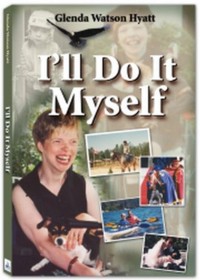
  3. Books and magazine subscriptions. For women with print disabilities, consider large print, audio books or electronic books. (My autobiography I’ll Do It Myself is also available in large-print format!)
  4. Amazon’s Kindle. This lightweight electronic reading device holds over 1,500 books and saves trying to flip pages. The Read-to-Me feature benefits individuals with print disabilities and those with some types of sight impairments, as does the adjustable font size.
  5. Make-up, perfumes and shower gels. Be aware of any allergies or chemical sensitivities. Great tips for adapting a make-up kit.
  6. Jewelry. If doing up necklaces and bracelets is difficult, check out these magnetic clasp converters. (I’ve seen these in London Drugs, too!)
  7. Looking for something more intimate, more playful, more sexy? Check out these tips on adapting adult toys.

The perfect gift comes down to knowing thy woman and giving from the heart!

What favourite gifts would you add to this list?

If you enjoyed this post, consider buying me a chai tea latte. Thanks kindly.

Related Posts

Making the Impossible Possible – Not Always Perfect or Pretty

Filed under: Blogging,Living with a disability,Motivation — by at 11:48 am on Thursday, November 26, 2009

BogWorld & New Media Expo bannerSeveral weeks ago, I had the honour of being a speaker at BlogWorld in Las Vegas.

Picking up my badge in the Speaker’s Line at Registration early Thursday morning, a few eyebrows were raised when I was asked if, indeed, I was a speaker.

Yes! Unbelievable, isn’t it?

A few short years ago, me, given my significant speech impairment due to my cerebral palsy, speaking at a large conference was Impossible. But, with advances in technology, creativity, determination, and a patient and understanding audience, the impossible became possible!
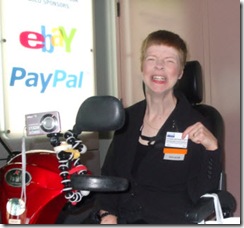
Glenda Watson Hyatt proudly holding up her BlogWorld 09 speaker's badgeThat speaker’s badge for the conference of the blogging industry represents a huge milestone in my story “Love at First Sound Byte: A Woman’s Journey from Being Labeled Non-Verbal to Being a Well-Sought-After Speaker” (potentially the title for my next book?).

Speaker Ready Room sign Shortly before my presentation time, I checked in at the Speaker Ready Room – another sign that the impossible was now possible.

I didn’t hang around in there though. I thought being in the same room as superstar speakers might cause me to panic even more; I was already feeling my athetoid cerebral palsy kicking in as my body began tightening.
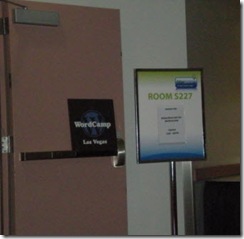
The WordCamp Las Vegas sign on the room's doorRather, I headed to the room where WordCamp Las Vegas was now being held. The last minute room change was one of many glitches to befall my panel presentation.
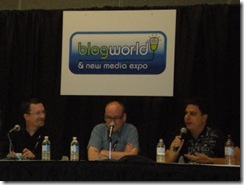
WordCamp Las Vegas' problogger panel with Chris Garrett, Darren Rowse and Jeremy WrightActually, I wanted to catch the panel with Chris Garrett, Darren Rowse and Jeremy Wright. Even though Chris and Darren had written the very successful ProBlogger: Secrets for Blogging Your Way to a Six-Figure Income, this was the first time they had presented together on the same stage.

When i first read ProBlogger, I had goose bumps reading how Chris and Darren both got started with blogging and how they turned it into a substantial income source in their own ways. They are what I would like to be when I become a grown-up blogger.

Following such an impressive panel, I felt my athetoid-ism kick up another notch. Part way into their presentation, I even tweeted, “I’m on at 1pm after @chrisgarrett & @problogger. No freakin’ pressure here!”

bloogworld-tweet

Once on stage – after a glitch with the stage lift and a technical glitch with the sound system – my co-panelist Damien Patton introduced our session and then kindly introduced me. 
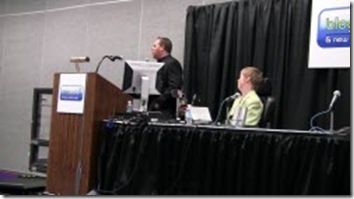
Damien Patton and Glenda Watson Hyatt presenting at WordCamp Las Vegas at BlogWorld

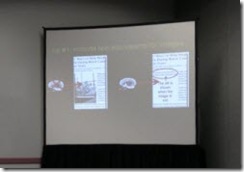
My PowerPoint presentation projected onto a large screenAs soon as I began my PowerPoint presentation, I realized the headings on the top and the captions on the bottom of the slides were cut off; apparently a glitch with the projector’s resolution. Here I am about to present on accessibility and one of my key accessibility features (i.e. captions, which took days to create) was not working. How annoying and frustrating! But, in the moment, I could not do anything except to carry on – without captions.

With all of the glitches and being star-strucked, I was not in the most relaxed state. My athetoid cp was in full force. From my side of the stage, I am sure I out spaz’d and out grimaced actor/Parkinson’s advocate Michael J. Fox and cerebral palsy comedian Josh Blue combined.

Somehow my twenty-five minute presentation ballooned to thirty-seven, leaving Damien mere seconds to give his presentation. However, a few years ago, the thought of me giving a thirty-seven minute presentation was inconceivable; impossible.

In the process of making the impossible a possibility, it isn’t always perfect, it isn’t always pretty. The key is to do! Closing in on perfection and prettiness will come from lessons learned and from refining the process. Compared to this presentation, the next one will be a breeze!


To read my presentation as an free ebook, check out How POUR is Your Blog? Tips for Increasing Your Blog Accessibility.


Our Las Vegas Trip in Review

Part 1: Hilton Room Disappoints on Accessibility
Part 2: Dreams Do Come True – With a Little Help from Friends
Part 3: Making the Impossible Possible – Not Always Perfect or Pretty

If you enjoyed this post, consider buying me a chai tea latte. Thanks kindly.
Related Posts

« Previous PageNext Page »