Do It Myself Blog – Glenda Watson Hyatt

Motivational Speaker

Parking Unnecessarily in Wheelchair Spaces is Bad Karma

Filed under: Accessibility 100 — by at 2:06 pm on Sunday, June 1, 2008

Accessibility 100

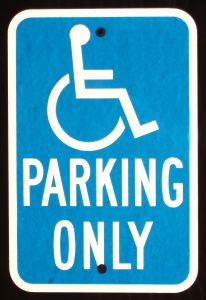
The Social Planning and Research Council of British Columbia (SPARC BC) reminds everyone that parking unnecessarily in handicapped or wheelchair spaces can have undesirable consequences. Listen to SPARC radio ad that will air on stations across the province this week, promoting Access Awareness Day on Saturday, June 7th.

Wheelchair parking sign
(Photo credit: Dani Simmonds)

The transcript reads:

Female: Yeah, we can’t park here.

Male: Why not?

Female: It’s handicapped parking.

Male: So?

Female: We’re not handicapped. That’s bad karma.

Male: Karma sharma, I’ll be right back.

[Male gets out of the car and slams the door]

Male screams in pain: Owwwwww!

Announcer: Parking in specially designated spaces without a permit is not only bad karma, it’s illegal. While you may not slam the door on your finger, you may get a fine. And remember, you’ll be taking that space from someone who truly needs it. SPARC – the Social Planning and Research Council of British Columbia – reminds you to be access aware. When it comes to designated parking, please cooperate. No permit, no parking. Now that’s good karma.


Accessibility 100 is a series of 100 easy-to-implement, free and inexpensive tips for improving accessibility for people with disabilities. This is a community project. Feel free to leave your comments, questions and ideas for future Accessibility 100 posts.

Get the entire series by subscribing to this blog by filling in the form in the upper right corner or by subscribing to the RSS feed.

If you enjoyed this post, consider buying me a chai tea latte. Thanks kindly.

Related Posts

Boy Voted Out of Kindergarten Because of Disability

Filed under: Advocacy,Living with a disability — by at 11:14 pm on Thursday, May 29, 2008

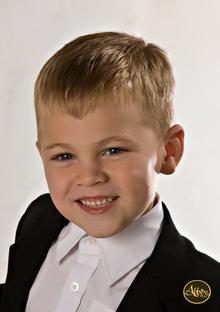
Alex Barton, a 5-year-old boy with blond hair and a big smile

Five-year-old Alex Barton was told to stand in front in his Kindergarten class while, one by one, his classmates said what they didn’t like about him – responding with such words as “annoying” and “frustrating”. Then, in a vote of 14 to 2, Alex was voted out of Kindergarten.

When his teacher Wendy Portillo, who implemented this punishment, asked Alex how he felt about what had occurred, he responded, “I’m sad.”

His crime: his “unusual behaviour” most likely caused by Asperger’s Syndrome, for which he is in the process of being diagnosed currently. Asperger’s Syndrome is often considered to be a type of “high functioning” autism, characterized by impaired social interaction and understanding, and restricted and repetitive activities and interests; learning and cognition are not usually delayed.

I was outraged when reading this story on Disaboom. How can an adult put a child through such hurtful humiliation?

The Florida State Attorney’s office concluded the matter did not meet criteria for emotional child abuse. No charges will be filed against the teacher.

Not emotional abuse?

Forcing a child to endure a verbal lynching is abusive, is emotionally and psychologically damaging!

A Thinking in Metaphors blog post details the teacher’s violations. Yet no charges have been laid?

Had Alex been an ethnic minority, there would have been protesting and rioting in the streets! But, because Alex has a disability, such conduct is okay? I think not! This is 2008, for pete’s sake! Society cannot turn away from such barbaric and cruel conduct, particularly from authority figures, any longer. This teacher needs to be held accountable for her actions and for the psychological pain and damaged she has caused.

Imagine how Alex feels about himself after being publicly humiliated by his peers. And, what about the other youngsters? How do they feel about tearing down a classmate? What has this taught them about accepting differences and bullying? Do they know the incident was wrong?

The children (and unenlightened adults) need appropriate education and guidance on accepting, valuing and embracing differences.

How can this adorable boy be anything but loved and cherished?

If you enjoyed this post, consider buying me a chai tea latte. Thanks kindly.

Random Posts

Team World: Be the Law of Attraction in Action

Filed under: Blogging,Social Media — by at 6:12 pm on Sunday, May 25, 2008

The Team World Tweet-a-thon - a worldwide event on Twitter

If you have been wondering why I disappeared last week, I can explain!

The Story of how an experiment was born and how it will make a difference in the world goes something like this….

Suzie Cheel had set herself a Big Hairy Audacious Goal (BHAG) and was on Open Mic Night over at Liz Strauss’s Successful Blog on Tuesday, May 20th. The topic was Great Turning Points. Being herself at a great turning point in her life, Suzie readily joined in.

Glenda: Hey Suzie, how goes your BHAG?
Suzie: BHAG – still a bit scary – launched my studio online today with a sale.
Would love if I could get all of you to help me promote this – I am giving prizes etc starting tomorrow, onmy Abundance Highway site, to people who promote me and my BHAG. Some will be LOA (Law of Attraction) stuff! I also plan to have tele-classes and a program to help bloggers use LOA to take your blogging to be really profitable, etc.
Liz asked Suzie: Tell us what BHAG stands for. 🙂
Suzie: As far as I can work out, the term scrawled on a million whiteboards by corporate trainers, Big Hairy Audacious Goals (BHAGs), was coined – or at least first publicized – by Jim Collins and Jerry I. Porras in their now modern business classic, Built to Last: Successful Habits of Visionary Companies.
Glenda: What do you need, Suzie? Hey, could we do a tweet-a-thon or something, assuming the bird stays awake?
Suzie: Great.
Glenda: Suzie, thinking out loud, if we put together a team of core tweeters in different time zones and we each tweet for an hour or so to send your message around the world. What do you think?? I’ve wanted to try something like for a while. Perhaps some would blog about the experiment too. Yes? No?
Liz: Suzie, I think the world-wide tweet might be an idea. 🙂
Liz Williams then said she would tweet too.
Glenda: Suzie, should we try it? I can help mobilize/organize Team World after Friday. Then we set one day to tweet. What do you think?

So the idea was born.

Suzie later added:

“When I set first gave myself this BHAG I planned that my Attraction plan would continue on to attract $$$$ for The China Library Project. This is for schools and kids in China who have no books and my friend Lonnie Hodge is passionate about doing something to remedy the situation. Did you know that for $1,000 we can equip a primary school in China with its own library?”

That is where I have been for the past week: planning the Team World Tweet-a-thon, a worldwide event on Twitter, to help Suzie attract the necessary resources to come to Vancouver next week! If you use Twitter, please join Team World and be the Law of Attraction in action!

The Accessibility 100 series will resume shortly.

If you enjoyed this post, consider buying me a chai tea latte. Thanks kindly.

Random Posts

My Journey to Six-Figure Blogging Begins Today

Filed under: Blogging,Work — by at 10:24 pm on Saturday, May 17, 2008

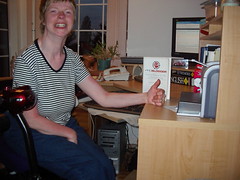
Glenda giving the ProBlogger book a thumbs up
Left Thumb Blogger Begins Her Journey to Six-Figure Blogging

A couple of weeks ago I pre-ordered ProBlogger: Secrets for Blogging Your Way to a Six-Figure Income by Darren Rowse and Chris Garrett. The very next day I received a Twitter message from Chris that I had won copy of their book. Wow! I didn’t know I had even entered a contest. Is that a message from the universe or what?! (I will be giving away one copy at a later date.)

Reading Darren’s story about how he went from a hobby blogger to a six-figure problogger in three years gave me goosebumps!

I yet again laughed at what an employment counselor once told me: Blogging is a passing fad. Well, perhaps it is a fad, but, until it fully passes, I know I can create an income from blogging. It may not be a six-figure income; I’d be quite content with a decent five-figure income.

With blogging as an income source, it erases all of the barriers I, a person with a physical disability, faced when searching for a job. With blogging, my typing speed and inability to answer phones – requirements for many jobs I applied for – don’t matter. With blogging, I don’t need to deal will transportation or the accessibility (lack thereof) of the workplace. I can work from the comforts of home, on my own schedule, doing what I love to do: writing and connecting with people from around the world. With blogging, technology has finally caught up to me and given me something else I can do, and with stories like Darren’s and Chris’s, I now have a goal to strive for.

I dove into ProBlogger, skimming the first few chapters that introduced blogging and explained how to set one up. Then came the good parts: blog writing, earning strategies, promotion and marketing. The ideas began flowing – not a book to read before falling asleep! A notebook on hand while reading is a must.

Both Darren and Chris point out, several times throughout the book, that problogging is not a get-rich-fast scheme; that it takes consistent hard work, countless late nights, some trial and error, and a bit of luck. None of which is new to me.

To go as far as I can with blogging, I need to learn, to absorb, as much as I can about the medium, the technology, the community-building, and the promotion strategies. Much of these can be learned online and from the still few books on blogging. But, there comes a point when nothing beats being in an actual room full of bloggers, exchanging ideas, strategies and lessons learned face-to-face.

The ultimate event for such experience is SOBCon – a conference for Successful and Outstanding Bloggers, founded by blogger extraordinaire Liz Strauss and held in Chicago in May. Touted as Biz School for Bloggers, attendees are guaranteed to leave with a Business Action Plan that can be immediately executed for measurable success. A plan for becoming a better and more effective blogger sounds good to me!

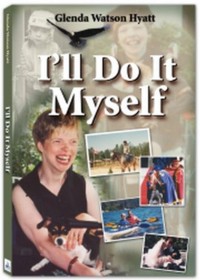
Unfortunately, SOBcon wasn’t in the budget this year. However, SOBCon09 definitely can be! A year to raise $2000+ – that is definitely doable! This is where I would like to request your support. I am not asking for charity. That isn’t my style. What I am asking for is, if you enjoy the posts on this blog, if you find value in what you read here, please consider buying me a coffee (link at the bottom of the post ) or a copy of my autobiography I’ll Do It Myself.

Together, we can make this happen. I look forward to meeting many of you in Chicago next May.

Thank you.

If you enjoyed this post, consider buying me a chai tea latte. Thanks kindly.
Random Posts

10 Tips for Communicating with People with Disabilities

Filed under: Accessibility 100 — by at 9:00 am on Thursday, May 15, 2008

Accessibility 100

Communication is the basis for all interaction between humans. When a disability is involved, the interaction is often hesitant, uncertain or even, unfortunately, avoided. Communicating with people with disabilities can be improved with these tips:

  1. When talking with a person with a disability, speak directly to the person rather than through a companion or sign language interpreter.

    I really dislike when someone turns to my husband for a response after asking me a question. Or, when a restaurant server asks, “What does she want?”

  2. When introduced to a person with a disability, offering to shake hands is appropriate. People with limited hand use or who wear an artificial limb can usually shake hands. (Shaking hands with the left hand is an acceptable greeting.)
  3. When meeting a person who is sight impaired, always identify yourself and others who may be with you. When talking in a group, remember to identify the person to whom you are speaking.
  4. If you offer assistance, wait until the offer is accepted. Then listen to or ask for instructions.

    I find it annoying when someone asks if I need help and then rushes in to help after I have kindly said no. Sometimes assistance is appreciated; other times I tolerate it as my good deed for the day so that someone else feels helpful.

  5. Treat adults as adults. Address people who have disabilities by their first names only when extending the same familiarity to all others. (Never patronize people who use wheelchairs by patting them on the head or shoulder.)
  6. Respect an individual’s personal space. Leaning on or hanging on to a person’s wheelchair or mobility device is similar to leaning or hanging on to a person and is generally considered annoying or, sometimes, even rude.

    If, however, you need to steady yourself for a moment, simply ask first.

  7. Listen attentively when you’re talking with a person who has difficulty speaking. Be patient and wait for the person to finish, rather than correcting or speaking for the person. If necessary, ask short questions that require short answers, a nod or shake of the head. Alternatively, enable the individual to write or type or use a communication device to communicate the message.

    Never pretend to understand if you are having difficulty doing so. Instead, repeat what you have understood and allow the person to respond. The response will clue you in and guide your understanding.

  8. When speaking with a person who uses a wheelchair or crutches or a person of short stature, place yourself at eye level by squatting down, leaning against a counter or taking a seat to facilitate the conversation, particularly if it may be a long one. This relieves the neck strain and the power imbalance perceived when someone is towering over another.

    Remember: My eye level is your fly level!
  9. To get the attention of a person who is Deaf or hard of hearing, tap the person on the shoulder or wave your hand. Look directly at the person and speak clearly and expressively to determine if the person can read your lips. If you are a fast talker, slow down your speech slightly to make it easier to understand.

    Not all people who are Deaf can read lips. For those who do lip read, be sensitive to their needs by placing yourself so that you face the light source and keep hands, cigarettes and food away from your mouth when speaking. Pen and paper can also facilitate communication.

    The easiest way to ask if a person wants to communicate by lip reading is to point to your lips with a questioning look, or by writing is to make the motion of writing in your palm with a questioning look.

  10. Relax. Don’t be embarrassed if you happen to use accepted, common expressions such as “See you later,” or “Did you hear about that?” that seems to relate to a person’s disability. Don’t be afraid to ask questions when you’re unsure of what to do.

Accessibility 100 is a series of 100 easy-to-implement, free and inexpensive tips for improving accessibility for people with disabilities. This is a community project. Feel free to leave your comments, questions and ideas for future Accessibility 100 posts.

Get the entire series by subscribing to this blog by filling in the form in the upper right corner or by subscribing to the RSS feed.

If you enjoyed this post, consider buying me a chai tea latte. Thanks kindly.
Related Posts

« Previous PageNext Page »